Start with what you actually need on
The mistake is sizing for everything. During an outage you do not need the entire house, you need the handful of things that matter: keep the food cold, keep heat or air moving, keep water running if you are on a well, keep some lights and the internet on. List those, and you have your real load.
Running watts vs starting watts
Every appliance has two numbers, and both matter:
- Running watts is the steady draw once it is on.
- Starting watts is the brief surge a motor needs to spin up, often two to three times its running watts. Fridges, well pumps, and air conditioners all surge.
You add up the running watts of everything you want on at once, then make sure the generator has enough extra starting-watt headroom for the single biggest motor to kick on while the rest is already running.
Typical essentials and what they pull
These are rough, typical ranges to plan with. Your exact appliances will have their own labels, always check those.
| Essential | Running watts (typical) | Surge on start |
|---|---|---|
| Refrigerator / freezer | 150 to 800 | Yes, brief |
| Furnace blower (gas heat) | 600 to 800 | Yes |
| Well pump (1/2 to 1 HP) | 1,000 to 2,000 | Large, 2 to 3x |
| Window AC unit | 1,000 to 1,500 | Yes |
| Lights (LED, several rooms) | 100 to 400 | No |
| Internet + phone charging | 50 to 150 | No |
| Sump pump | 800 to 1,200 | Large |
Add up your list, then add headroom for the biggest surge. For most homes the essentials land in the 5,000 to 8,000 running-watt range, which is why generators in that size are the sweet spot.
How the inlet size ties in
Your generator's 240-volt outlet and the inlet we install set a ceiling on how much you can pull through one cord:
We match the inlet to your generator's outlet and to the load you described, so the cord, inlet, and breaker all line up. You are never paying for more than your setup can use.
What the install costs
- Weatherproof inlet box (30A or 50A)
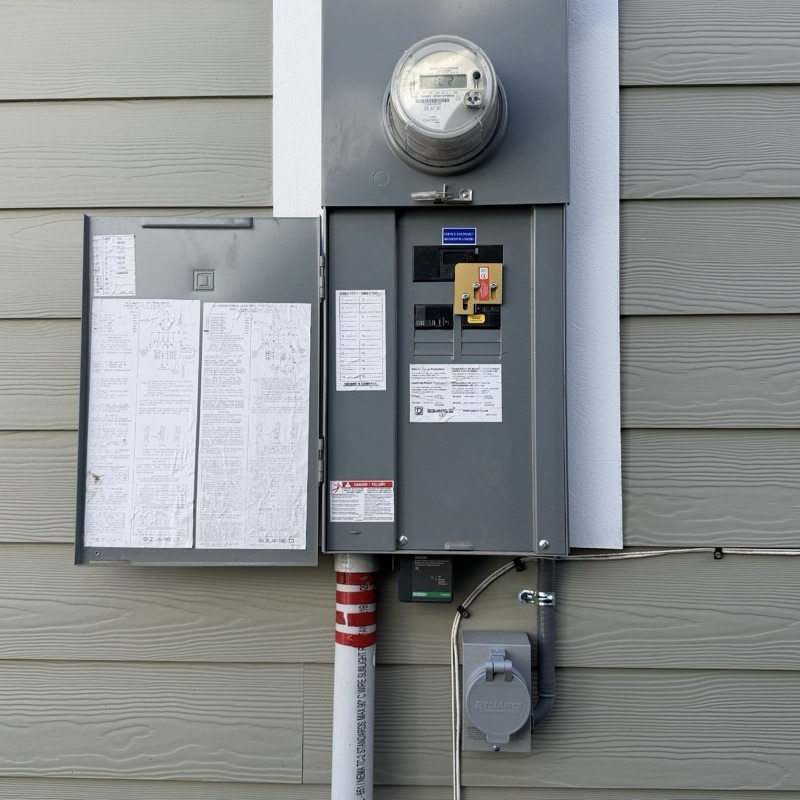
- Listed interlock kit for your panel
- Generator breaker installed
- All wiring, conduit, weatherproofing
- The permit and inspection
- One-day labor, no return trips
The honest scope
This connects the portable generator you size and own to power your selected essential circuits through your panel. A portable is not meant to run every circuit in the house at once, and that is fine, the whole point is to pick the essentials and keep them on. If you want automatic backup for the entire house, that is a whole-home standby generator, a different and much larger investment we are happy to be honest with you about.
Not sure what your essentials add up to? Tell us what you want to keep running and we will help you match a generator and the right inlet. Read the full inlet and interlock guide, or get your price below.